Laboratory applications: from sample to analysis
Explore preparation and measurement steps for your samples, from targeted cell collection and LC-MS preparation to pharmaceutical, food and feed quality control. Materials and environmental applications are also covered.
Life sciences & bioprocessing
Collect individual cells, fragment nucleic acids and prepare proteins for LC-MS, supported by parallel pipetting and fluid transfer.
Collect selected cells
Transfer individual cells or selected regions from an accessible sample into a receiving vessel for further investigation.
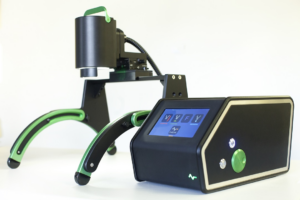
NDX UnipicK supports manual collection. UnipicK+ adds digital vacuum control and pressure-assisted deposition. A-picK automates collection and deposition in a configuration matched to the application.
Selection criterion: Match the sample, collection capillary, inverted microscope and downstream analysis.
Technical requirements
Fragment DNA, RNA and chromatin
Produce the required fragment distribution in DNA or RNA for NGS preparation, or in chromatin for ChIP-seq.
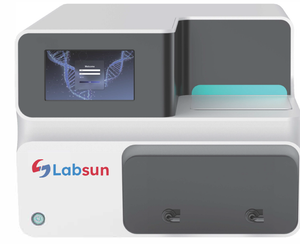
Labsun FRAG96 treats 1–96 samples with focused ultrasound in closed vessels. Vessels and holders determine the usable batch size.
Selection criterion: Match the target fragment distribution, protocol and temperature control to the sample and downstream analysis.
Technical requirements
Prepare proteins for LC-MS
Clean up and enzymatically digest protein samples. The resulting peptides are desalted in the next step before LC-MS.
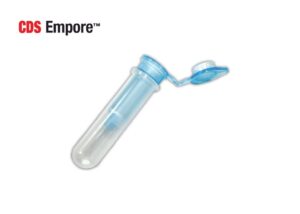
CDS Empore E3filter suits individual samples in a spin format; E3plate supports parallel processing in a 96-well format.
Selection criterion: Check protein amount and lysis buffer; E3plate needs a suitable plate carrier.
Technical requirements
Desalt peptides before LC-MS
Desalt peptides after protein digestion and elute them for LC-MS.
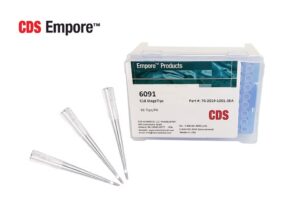
Select the prepacked CDS Empore C18-HD StageTip format and membrane layers for the peptide amount and sample volume.
Selection criterion: Match loading, pH and elution to the protocol; tip volume is not binding capacity.
Technical requirements
Pipette sample batches in parallel
Perform repeated transfers, dilutions and mixing steps in parallel across microplates.
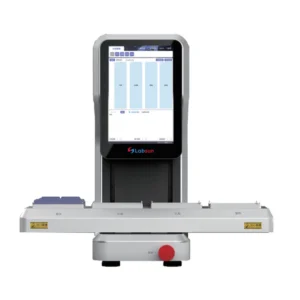
The 96-channel head of Labsun EB P96 supports consistent parallel transfer patterns. Select the module, tips and plates for the working volume and liquid.
Selection criterion: Channels are not independently addressable; verify accuracy with the actual liquid.
Technical requirements
Configure bioprocess fluid paths
Transfer fluids between vessels and process steps, selecting transfer lines, pump tubing and connections for their respective roles.
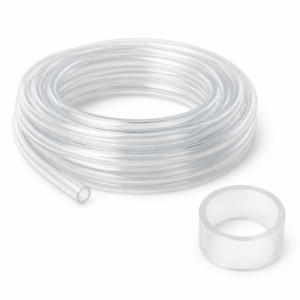
Consider Labsun PT-Flex for weldable and sealable lines, and Platinum 60 for pump tubing. Select PP connectors to match the tubing dimensions.
Selection criterion: Confirm fluid compatibility, dimensions, sterilization and operating conditions for the complete assembly.
Technical requirements
Pharmaceutical quality control
Particle testing and osmolality measurement address different tasks in pharmaceutical quality control.
Test insoluble particles in liquids
Determine particle counts and size classes in suitable pharmaceutical liquids and assess them using the intended test method.
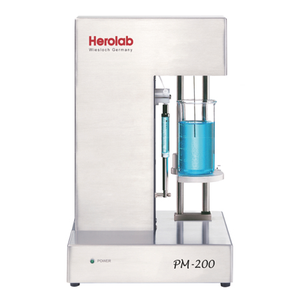
Herolab PM-200 uses light obscuration. Select the sensor, size range and analysis software for the specific measurement task.
Selection criterion: Assess pharmacopoeial suitability, qualification and data integrity against the quoted configuration and test method.
Technical requirements
Support reliable osmolality measurements
Calibrate existing OSMOMAT instruments with suitable standards and prepare measurements using model-specific vessels.
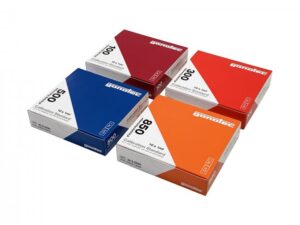
Select GONOTEC standards and vessels by instrument model and calibration plan. The linked standard is 300 mOsmol/kg; other calibration points can be requested.
Selection criterion: Check the instrument model and manufacturer instructions. This selection covers standards and consumables for existing osmometers.
Colour measurement in pharmaceutical quality control
For clear liquids, use the transmission method, scale and cell path length specified for the sample. For solids, select a reflectance configuration for the surface and measurement geometry. Confirm the method and reference materials with Labsun.
Discuss pharmaceutical colour measurement →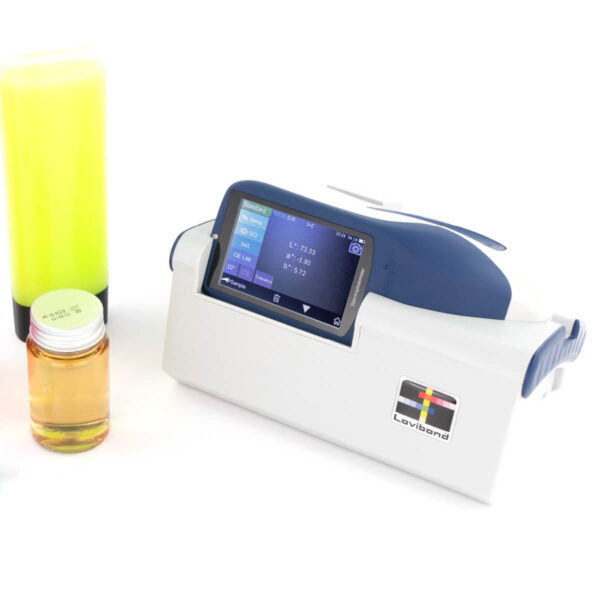
Food & feed quality
Nitrogen and protein determination, alongside titratable parameters for food and feed testing.
Determine nitrogen and calculate protein
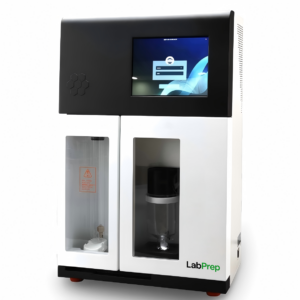
Test food and feed using a suitable Kjeldahl method through coordinated digestion, distillation and titration steps.
Labsun SH420F supports digestion and S402 treats the resulting fumes. K1160 automates distillation, titration and result calculation.
Selection criterion: Define the matrix and standard method; use the appropriate nitrogen-to-protein conversion factor.
Technical requirements
Determine titratable quality parameters
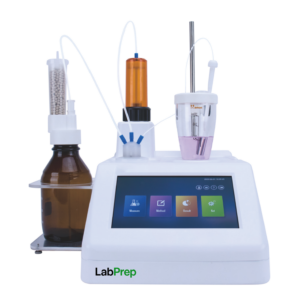
Determine titratable parameters in food, for example by acid–base titration. Sample preparation and endpoint detection depend on the matrix and target parameter.
Labsun T860 supports potentiometric titration. Select the electrode, titrant and evaluation method for the determination.
Selection criterion: Verify sample preparation, solvent and method with the actual food matrix.
Technical requirements
Colour measurement of edible oils and fats
Select the colour scale and cell path length specified for the sample. For fats and oils that can crystallise, confirm the temperature and instrument configuration needed to keep the sample liquid.
Discuss an oil or fat measurement →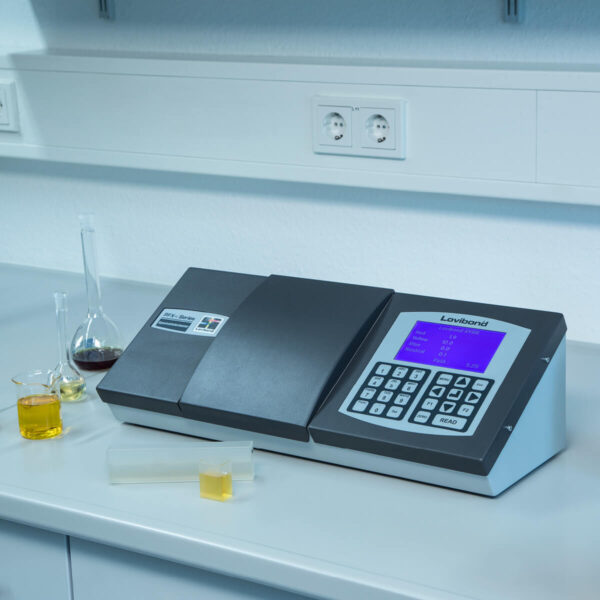
Colour measurement for beer, syrups and honey
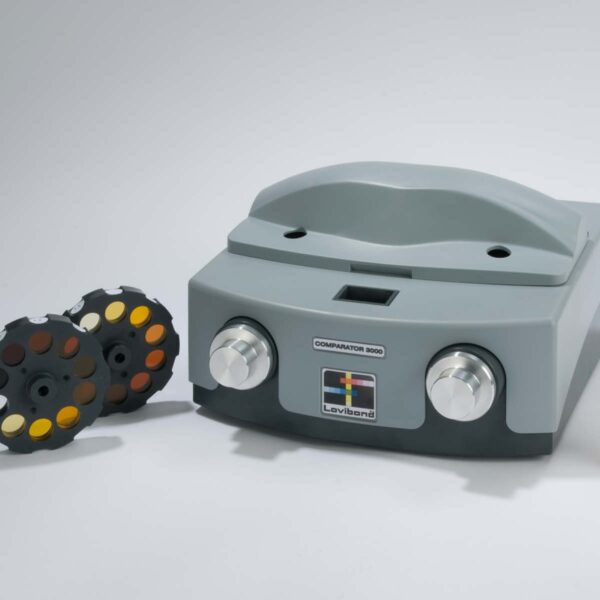
Use the scale specified for the product. EBC applies in beer workflows, whereas ICUMSA and Pfund address different sugar and honey methods.
PFXi-195/4 and PFXi-195/7 address different sets of scales. Confirm sample preparation and cell path length for the selected method.
Compare colour scales for beer, fruit juice, syrup and honey →Enquire about colour measurement for beer, fruit juice, syrup and honey →
Materials & process liquids
Prepare material samples with ultrasound and test process liquids for particles or titratable parameters.
Disperse and homogenize material samples
Use direct ultrasound to disperse, emulsify or homogenize liquid samples and suitable suspensions.
Labsun 650L introduces ultrasound through a probe. Select the probe and cooling for the volume, viscosity and heat sensitivity.
Selection criterion: Assess solids content, vessel and temperature limit; verify the target particle size or material property separately.

Investigate process-liquid quality
Test process liquids for insoluble particles or a titratable chemical parameter. The measurement question determines the method.
Herolab PM-200 measures particle counts and optical size classes. Labsun T860 supports suitable potentiometric titrations.
Selection criterion: Match the matrix and measurement task to the sensor or electrode.
Technical requirements
Low Pt-Co colour values in transparent liquids
For nearly colourless chemicals and transparent battery electrolytes, consider the Lovibond ICx with a suitable 100 mm cell, such as the W600/B/100 borosilicate glass cuvette (656030), and a method-appropriate reference check. Confirm cell compatibility and moisture protection for the sample. For electronic chemicals, review the specific solvent or process liquid before selecting a configuration.
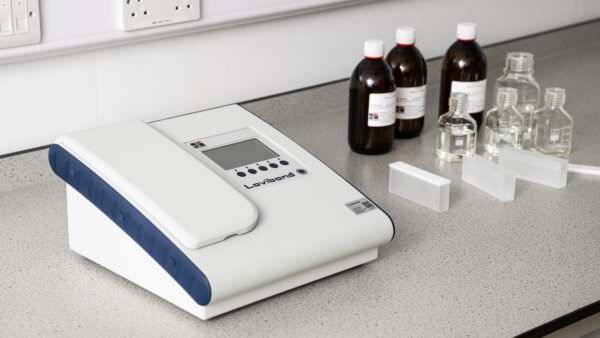
Colour measurement for petroleum products and fuels
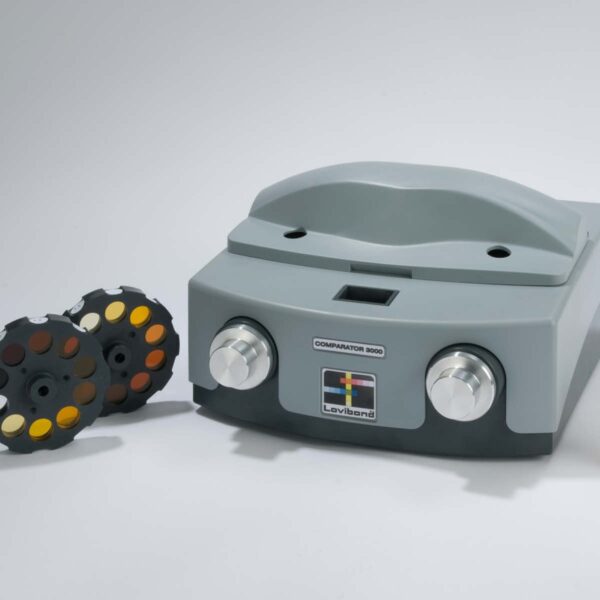
For suitable clear fuels and petroleum products, select Saybolt or ASTM Color according to the product specification.
Compare PFXi-195/2, PFXi-880/P and PFXi-950/P by scale and cell path length. Review cloudy samples, used oils and opaque samples separately.
Compare petroleum methods and configurations →Colour evaluation for electronic chemicals
Review the specific solvent or process liquid, target colour range, sample clarity and chemical compatibility before selecting a measurement system.
Use a sample-specific review for aggressive liquids, HF-containing samples and CMP slurries. Colour readings do not establish water content, purity or metal concentrations.
Review sample limits and instrument selection →Colour measurement of powders and solid surfaces
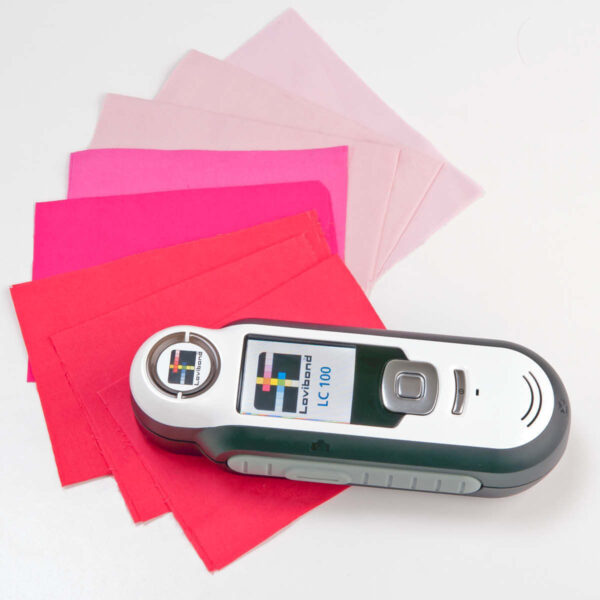
Use reflectance for suitable powders, solids and surfaces. Define sample presentation and the area to be measured.
Select the measurement geometry and aperture for the sample and confirm the verification materials.
Compare reflectance measurement configurations →PFAS & environmental analysis
Prepare water samples by SPE, collect volatile compounds for GC or extract analytes from solids: the matrix and target analytes determine the method.
Prepare water samples for PFAS analysis
Enrich target analytes from suitable water samples by solid-phase extraction for PFAS trace analysis.
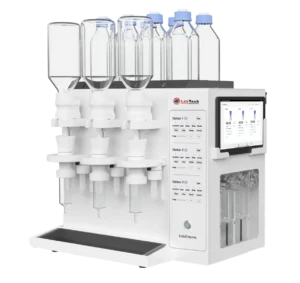
LabTech AutoEmpore automates SPE method steps for sample batches. CDS Empore EZ-Trace PFAS provides six parallel, manually controlled vacuum-SPE channels.
Selection criterion: Verify the SPE medium, wetted materials, blanks and recovery across the full workflow.
Technical requirements
Prepare volatile analytes for GC or GC-MS
Prepare volatile organic compounds in suitable water or soil samples for GC or GC-MS using purge-and-trap.
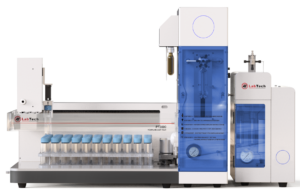
LabTech PT3000 supports this step. The matrix, target analytes and method determine the configuration.
Selection criterion: Confirm the interface to the existing GC/GC-MS system and the transfer path before configuration.
Extract analytes from solid samples
Extract analytes from suitable solid environmental or material samples using solvents under pressure.
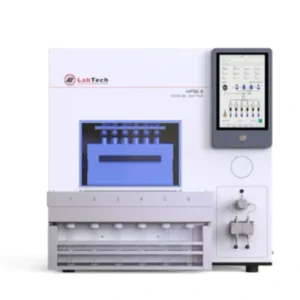
LabTech HPSE-6 supports pressurized solvent extraction. Define sample preparation and extraction conditions for the target method.
Selection criterion: Match the matrix, target analytes and solvent to the extraction method.
Shared sample-preparation steps
Concentrate and separate samples, supply laboratory water and view samples under UV: supporting steps across laboratory applications.
Concentrate extracts and sample solutions
Remove solvent and bring samples to a volume suited to downstream analysis. Temperature and solvent compatibility determine the process.
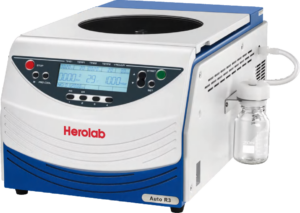
Herolab Auto R3 supports centrifugal concentration with suitable rotors and vessels. LabTech MVP48 supports parallel vacuum concentration of up to 48 samples.
Selection criterion: Coordinate vessels, starting and final volumes, and the condensation system.
Separate samples by centrifugation
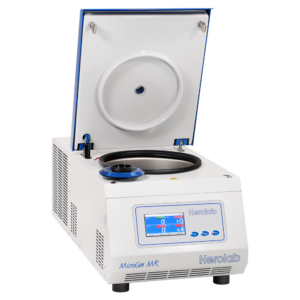
Sediment samples or separate phases for subsequent steps. Required RCF, vessel format and temperature guide selection.
Herolab MicroCen MR suits microlitre applications. UniCen MR offers a broader rotor choice for different vessel formats.
Selection criterion: Check refrigeration, capacity, rotor, adapters and vessel load limits together; RCF is not rotational speed.
Match laboratory water to the method
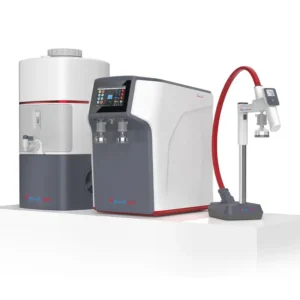
Provide water for sample preparation, reagents and analytical workflows. The method determines the required water-quality parameters.
Labsun XUE 20 UVF is an option for coordinated Type I/II/III supply. Match the system configuration, filters and modules to feed water and quality requirements.
Selection criterion: Nominal production is 20 L/h; size the tank, daily demand and peak dispensing separately.
View gels and fluorescent samples
Visualize suitably labelled samples under appropriate UV illumination and define the documentation workflow.
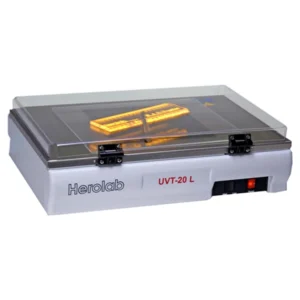
Herolab UV transilluminators illuminate gels across a filter surface. UV analysis lamps provide targeted illumination for fluorescence inspection.
Selection criterion: Match the dye, wavelength, sample format, filter area and required UV protection.